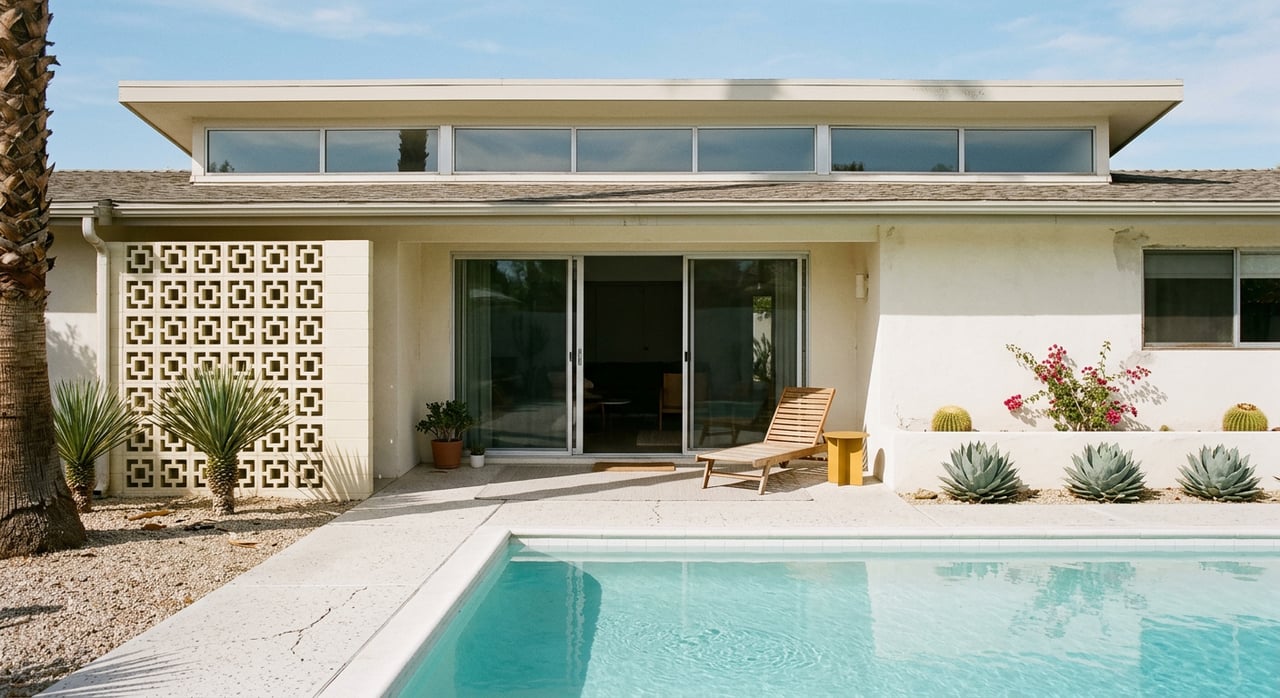
Dreaming of a glass-walled living room, mountain views, and a pool just steps from your sofa? If Palm Springs mid-century homes have been on your radar, you are in good company. Design lovers and second-home seekers come for the architecture and stay for the lifestyle. In this guide, you will learn the hallmarks of Desert Modern design, where to look, how to experience these homes, and what to know before you buy. Let’s dive in.
What makes a Palm Springs mid-century home
Palm Springs is a global center of mid-century modern design, with a calendar built around architecture tours and events. The city’s signature festival, Modernism Week, showcases the legacy that took shape from the 1940s through the 1960s. Architects like Albert Frey, Richard Neutra, E. Stewart Williams, William Krisel, Donald Wexler, John Lautner, and A. Quincy Jones adapted modern ideas to the desert climate and resort lifestyle. That work still sets the tone in today’s neighborhoods, as documented in local historic research such as the Historic District Nomination.
Exterior hallmarks to spot
- Strong indoor to outdoor flow with long runs of glass, often framing views and opening directly to patios and pools. You can see this celebrated at examples like Sinatra’s Twin Palms estate highlighted by the Palm Springs Preservation Foundation.
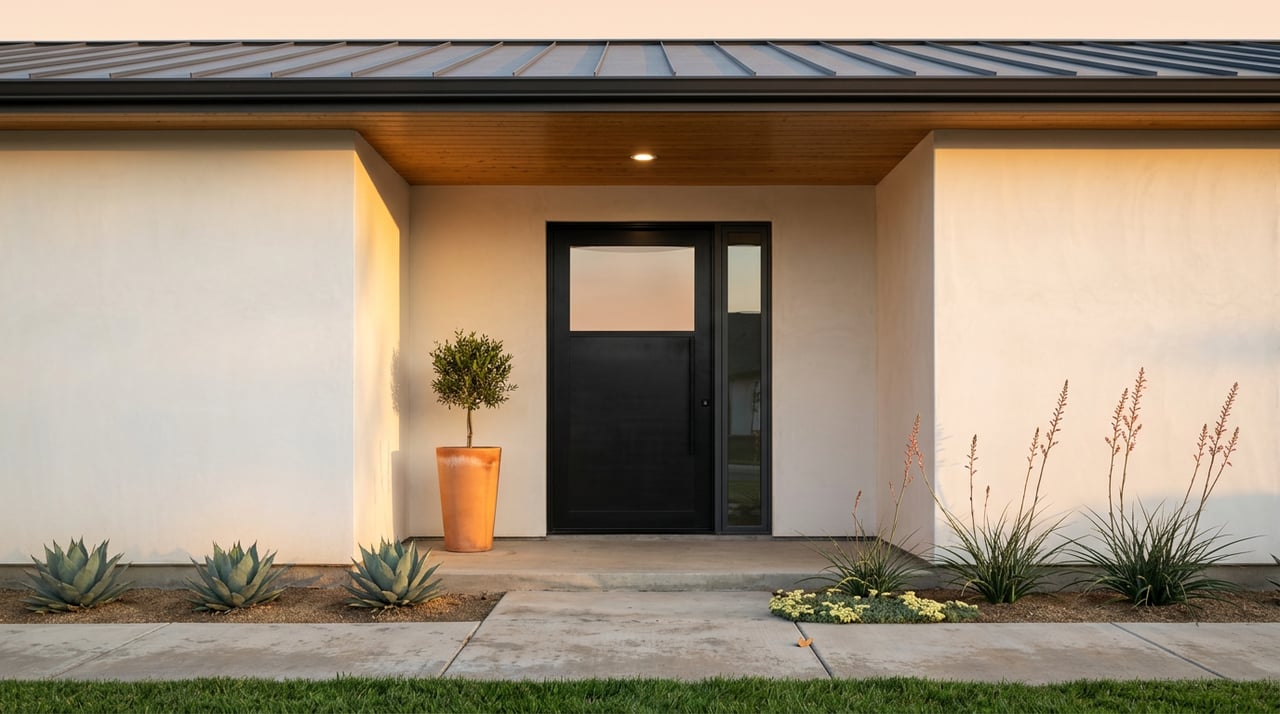
- Low or flat rooflines with slim eaves that create shade and emphasize horizontal lines.
- Post and beam or light-gauge steel structures that allow wide openings without heavy walls. Local experiments, including Wexler’s steel houses, helped define the look.
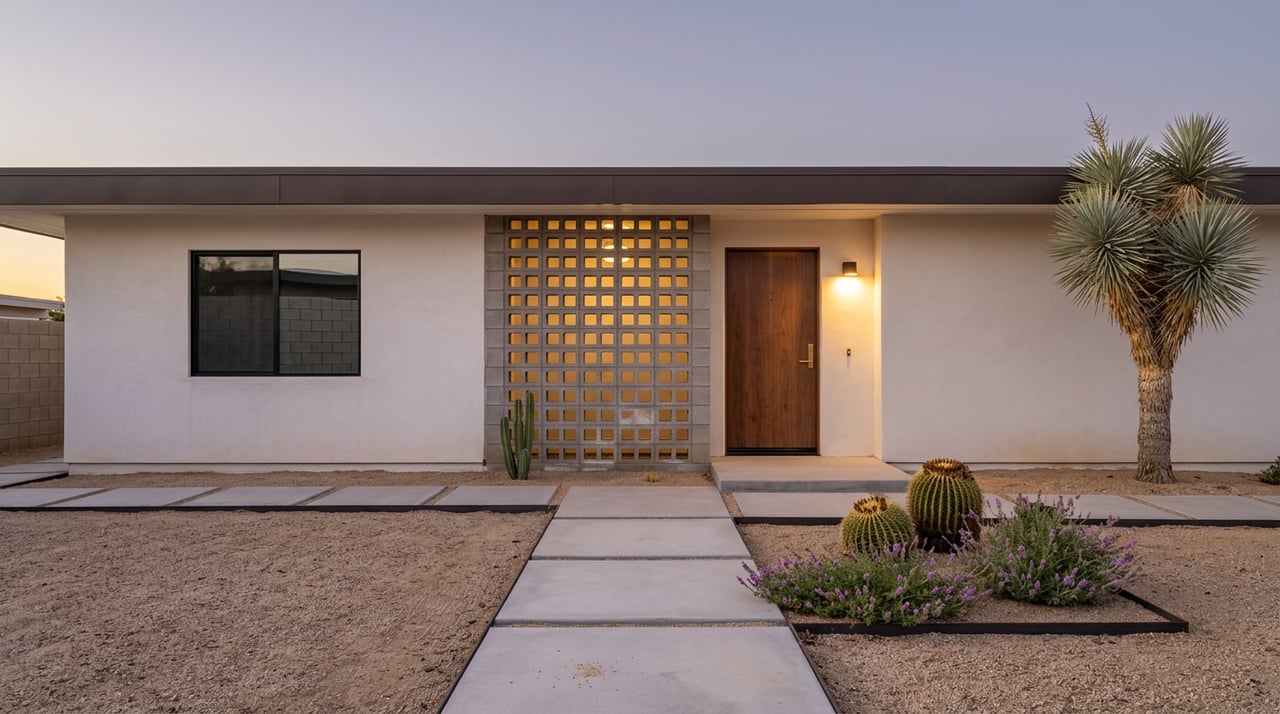
- Sun-control elements such as clerestory windows, breeze-block screens, and extended roof planes that temper desert light while adding pattern and texture, as noted in preservation studies like the Historic District Nomination.
- Outdoor-focused sites with private courtyards, atria, and integrated pool terraces that feel like true extensions of the living room.
- A materials palette of glass, steel or aluminum, concrete, wood, and accents like local stone and terrazzo.
Interior plans and details
- Open living, dining, and kitchen zones with minimal partitions make everyday spaces feel connected. That openness is a defining mid-century trait featured across Modernism Week.
- Most homes are single-story with 1 to 3 bedrooms, though custom estates add scale and privacy. Some use split or multi-pod plans to capture views and separate bedroom wings. The Krisel-designed “House of Tomorrow,” often called the Elvis honeymoon house, shows a dramatic multi-level pod concept covered by Dwell.
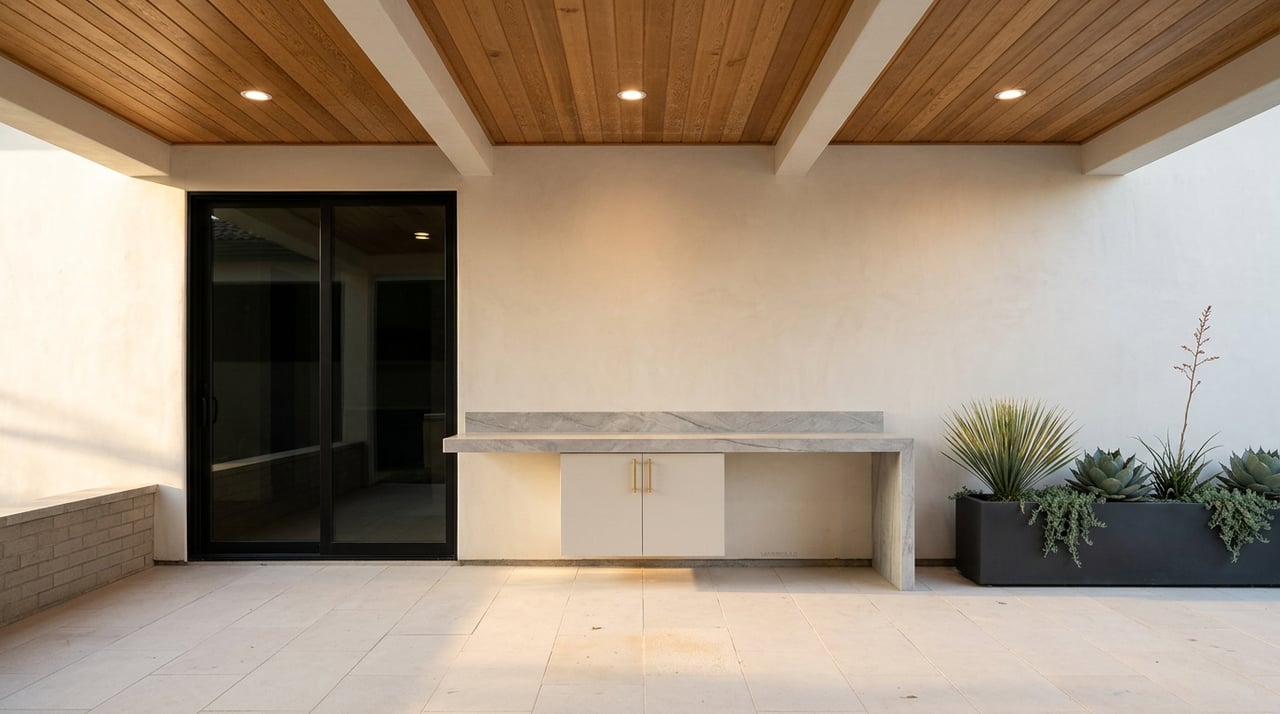
- Features prized by many buyers include built-ins, terrazzo or stone floors, tongue-and-groove ceilings, and classic carports.
Neighborhoods to explore
Palm Springs is compact, and many neighborhoods cluster distinct versions of mid-century design.
- Vista Las Palmas has notable Alexander and Krisel work, including larger custom homes and the Krisel-designed House of Tomorrow.
- Twin Palms and the Movie Colony include early celebrity commissions. E. Stewart Williams’s Sinatra “Twin Palms” estate is a landmark frequently featured in preservation tours.
- Racquet Club Estates and Racquet Club East concentrate Alexander and Krisel tract homes, offering a wide sample of mid-century types on a single drive.
- Old Las Palmas and Deepwell Estates mix custom estates with modernist gems on larger parcels. Canyon View and Tahquitz River areas have their own clusters of period architecture.
- Iconic examples often discussed on tours include Frey House II, Kaufmann Desert House, Twin Palms, and the House of Tomorrow. For context on Frey’s work and museum stewardship, see reporting from The Art Newspaper on the museum’s architecture resources and properties like Frey House II (read more).
Why these homes appeal
- The aesthetic is unmistakable. Clean lines, original details, and strong architectural identity instantly read as Palm Springs. That design culture is sustained by programming from Modernism Week.
- The climate supports true indoor to outdoor living. Pools, patios, and shaded courtyards are usable much of the year, as seen at regional estates with public gardens like Sunnylands.
- A deep cultural infrastructure keeps interest high. Tours, exhibitions, and preservation groups build community around architecture and design.
Buy with eyes open
Mid-century homes are special. They also invite careful planning so you preserve character while updating comfort.
Authentic vs updated
If you want period authenticity, look for intact rooflines and floor plans, original materials like terrazzo, stone, and built-ins, and thoughtful renovations that respect the architecture. Local organizations such as the Palm Springs Preservation Foundation share research and tours that help you learn how to spot the real thing.
Historic designation basics
Some properties are locally designated as Class 1, 2, or 3 historic resources. Exterior changes to these homes can require review by the city’s Historic Site Preservation Board. Incentives like Mills Act contracts may be available for qualifying historic resources. For process details and standards, start with the city’s Historic Site Preservation Board page. Neighborhood-scale efforts also occur, such as the Enchanted Village exploratory application, which shows how public outreach shapes proposed districts (learn more).
Market positioning today
Design-forward buyers, second-home seekers, and preservation-minded residents drive demand. Seasonal events and year-round tours help sustain visibility for these properties, which often command attention when they retain authentic features. Modernism Week and local tourism help keep the spotlight on this market segment.
Touring and resources
- Tour schedules. The main February festival and the October series from Modernism Week offer home tours, architecture bus tours, and year-round programs.
- Preservation groups. The Palm Springs Preservation Foundation researches and nominates historic sites and hosts tours that often include marquee properties like Twin Palms.
- Museum access. Frey House II has limited, scheduled visits through the Palm Springs Art Museum or special openings covered in museum and event announcements (overview).
- Complementary estates. Sunnylands offers guided tours and public gardens that round out a design-focused visit to the desert.
Quick buyer checklist
- Define your priorities. Original detail, lot orientation, mountain views, or a move-in-ready renovation will guide your search.
- Verify what is original. Note glazing, rooflines, flooring, built-ins, and plan changes. Photograph everything for later comparison.
- Inspect with specialists. Vintage glass, roof assemblies, mechanicals, and period materials often need knowledgeable contractors.
- Check designation status. Confirm any local historic class and review requirements with the city’s HSPB.
- Plan upgrades that respect character. Budget for efficient HVAC, improved insulation, and sympathetic window solutions.
- Experience the lifestyle. Visit during tour season, walk the neighborhoods, and note sun angles, privacy, and outdoor usability.
Ready to explore Palm Springs mid-century homes or curate a shortlist that fits your goals and timeline? Connect with John Wagner for clear guidance, discreet coordination, and a process-driven plan to buy with confidence.
FAQs
What defines an authentic Palm Springs mid-century home?
- Look for original materials like terrazzo and stone, intact rooflines and open plans, period built-ins, and thoughtful updates that preserve the architectural intent. Local preservation groups such as the Palm Springs Preservation Foundation share helpful research and tours.
Can you tour landmark mid-century houses in Palm Springs?
- Yes. Many private interiors open during the main February festival and October series, with year-round options. Preservation groups and the Palm Springs Art Museum also schedule limited-access tours. Check event calendars early since popular tours sell out.
How do historic designations affect owners in Palm Springs?
- Local Class designations typically focus on exteriors. Proposed exterior changes to designated properties may require review by the Historic Site Preservation Board, and qualifying resources can pursue Mills Act contracts that may offer property tax benefits.
What should I know about maintenance on these homes?
- Large glass walls, thin roof overhangs, and vintage systems may need specialist evaluation. Plan for sympathetic upgrades to HVAC, glazing, and insulation so comfort improves without losing character.
When is the best time to visit for architecture tours?
- Peak programming happens in February with a shorter series in October, and many tours run in the cooler winter and spring months. Book as early as possible for the most in-demand homes and bus tours.