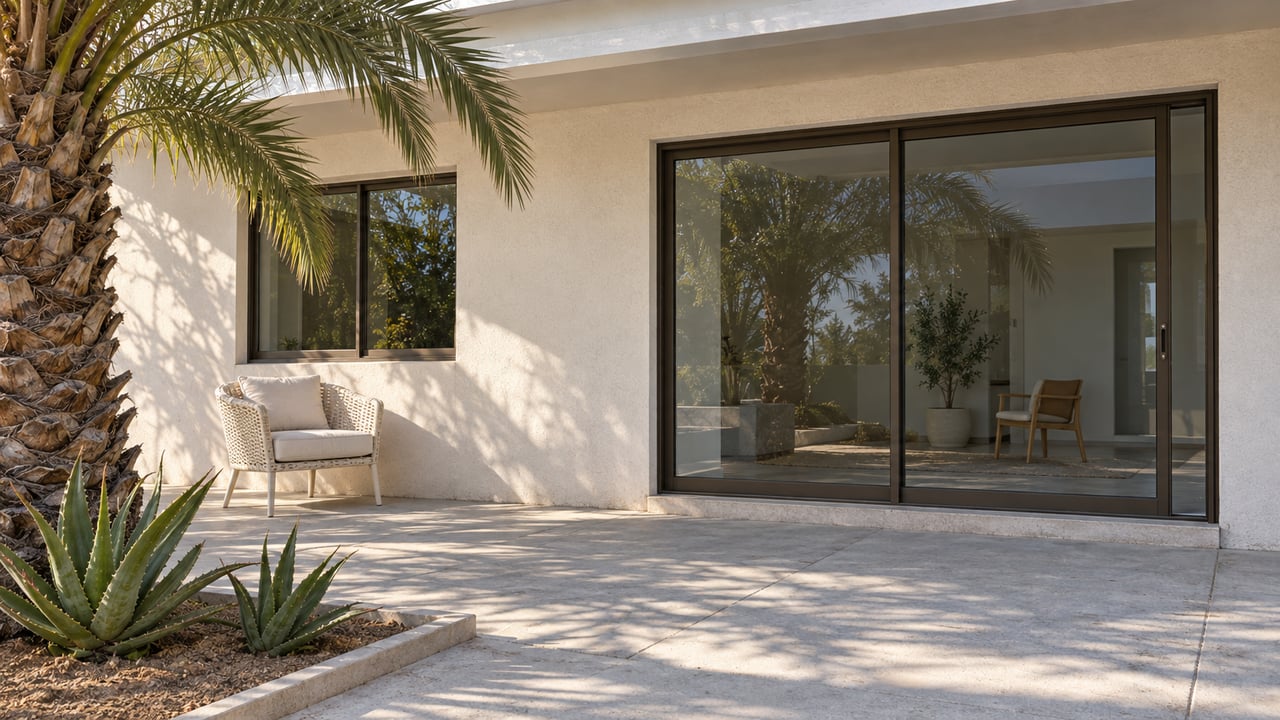
A listing shows a full season of short-term rental income from last year. The photos show a renovated mid-century property in Racquet Club Estates, a private pool, and a rental calendar that stays booked through the winter months. A buyer runs the numbers, likes what they see, and assumes that income comes with the house.
In Palm Springs, it often doesn't.
The city's vacation rental certificate is not a fixture that stays with the property like a pool heater or a built-in range. It is a personal registration, tied to the individual who holds it, and it generally ends when the property changes hands. Whether the next owner can pick up where the seller left off depends on a separate calculation entirely, one that has nothing to do with the house and everything to do with how many other short-term rentals already exist on that same street.
A Certificate Attached to a Person, Not a Parcel
The City of Palm Springs treats short-term rental activity as a regulated privilege rather than an automatic right of ownership. Every operator needs a Vacation Rental Registration Certificate under Chapter 5.25 of the municipal code, and that certificate belongs to the person who applied for it. It is not recorded against the property the way a deed or an easement would be. When the property sells, the certificate generally lapses, and the new owner has to apply from scratch.
That application is not automatic or free. As of mid-2026, a standard certificate runs $1,046 a year, a Junior certificate (capped at six rental contracts annually) runs $523, and an Estate Home land use permit adds another $647 on top for larger properties that qualify under that category. None of those fees are refundable, whether or not the application is ultimately approved.
The city's vacation rental program page lays out the current rules, including the July 8, 2026 adoption of Ordinance No. 2133, which amended Chapter 5.25 and added a section implementing California's Short-Term Rental Facilitator Act of 2025. That new section will eventually require booking platforms to display a city-issued permit number on every Palm Springs listing and to hand over addresses and parcel numbers on request, which makes it harder for an unpermitted rental to hide in plain sight on Airbnb or Vrbo.
The 20 Percent Line
Even a buyer willing to pay the fee and go through the process can run into a harder wall: the neighborhood itself might already be full.
Palm Springs caps vacation rental certificates at 20 percent of the total residential dwelling units within each organized neighborhood, using boundaries drawn by ONE-PS, the city's umbrella group of recognized neighborhood associations. Once a neighborhood hits that 20 percent threshold, the city stops issuing new standard certificates there. A would-be operator can join a waitlist, and openings are filled first-in, first-out as existing certificates lapse or transfer out, but there is no guarantee of when or whether a spot opens up.
The city has published neighborhood-by-neighborhood density figures before, and past snapshots have shown several neighborhoods already at or past that line, including Desert Park Estates, El Mirador, El Rancho Vista Estates, Gene Autry, Movie Colony East, Racquet Club Estates, and Sunmor. That list is a moving target. Certificates lapse, new ones get issued, and a neighborhood that had room a year ago can be full today, or vice versa. The only way to know where a specific address stands right now is the city's live density map, not a percentage repeated from an older guide or a prior year's table.
This is the piece that turns a marketing number into a legal question. A seller's current rental income tells a buyer what the house has earned under one owner's certificate. It says nothing about whether that certificate, or a new one, will exist for the next owner.
What This Does to the Price
Here is the part that doesn't show up on a rent roll: if a property sits in a capped neighborhood, the buyer pool for that home effectively splits in two. One group can use it as a personal residence or a long-term rental and doesn't care about the cap. The other group specifically wants short-term rental income and can't legally get it unless they win the waitlist lottery or acquire an existing, transferable arrangement, which the ordinance makes difficult by design.
A seller who prices a home based on trailing twelve months of Airbnb receipts is pricing it for a buyer who may not be allowed to replicate those receipts. That gap between advertised income and available income is exactly the kind of detail an appraiser, a lender, or a sharp-eyed buyer's agent will eventually surface, usually at a less convenient moment than during initial offer negotiations.
For sellers, this means documenting the certificate's status honestly rather than leaning on last year's booking calendar as if it were a guaranteed cash flow. For buyers, it means the sale price should reflect what you can legally do with the house after closing, not what the current owner has been doing with it. Anyone comparing options across the desert corridor, from Palm Springs to Palm Desert to La Quinta, should ask that same question before assuming rental income travels with the sale.
The Timing Trap in Escrow
The mechanics of the application process add another layer of friction that catches buyers off guard. The city does not accept vacation rental certificate applications while a property is in escrow. Typical approval timelines run 30 to 90 days once an application is filed, which means a buyer cannot even start the clock until after closing.
That gap matters most in neighborhoods sitting close to the 20 percent cap. A property could be under the threshold on the day an offer is accepted and at or over it by the time the new owner is finally eligible to apply weeks or months later. Waiting until after closing to find out is the expensive way to learn this.
What Changed in 2026
The rules have kept moving, which is part of why a certificate from a few years ago can look different from one issued today. Contracts, meaning individual rental bookings regardless of length, are capped annually per certificate. Certificates issued after October 17, 2022 are limited to 26 contracts a year. Certificates issued on or before that date kept a more generous 32 contracts, plus up to four additional bookings if they fall entirely within the third quarter of the year.
That legacy cap was scheduled to drop to 26 for everyone on January 1, 2026. It didn't. The City Council adopted Ordinance No. 2118 on November 12, 2025, canceling that scheduled reduction, so pre-2022 certificate holders keep their higher contract allowance for now. It is one more reason a certificate's history, not just its existence, matters to anyone trying to understand what a specific property can actually generate.
How to Check Before You Write an Offer
A few steps take the guesswork out of this before a buyer is committed:
- Look up the specific address on the city's vacation rental density map to see the neighborhood's current percentage, not a number quoted in an old listing sheet or a general web guide.
- Ask directly whether the seller's certificate is a standard, Junior, or Homeshare registration, and when it was originally issued, since the issue date determines the contract cap that would apply to a new certificate.
- Confirm with the listing agent or the city whether the neighborhood currently has an open waitlist, and how long recent applicants have been waiting for a spot to open.
- Build the offer around the property's value as a residence first, treating any rental income as a bonus that depends on a permit you don't yet have.
- If the plan depends on rental income, build in the 30 to 90 day post-closing approval window before assuming any cash flow.
For a broader look at how the city's rental rules work day to day, our earlier post on buying a Palm Springs home to rent out covers the operational side, from noise standards to occupancy limits. This piece is about the narrower and often overlooked question of what happens to all of that at the closing table.
A Few Questions Worth Settling Early
Does a Junior Permit get around the neighborhood cap? Junior certificates, limited to six rental contracts a year, are not counted toward the 20 percent neighborhood cap. That makes them worth asking about for a buyer who wants occasional rental flexibility rather than a full-time short-term rental operation, though six contracts a year is a modest ceiling compared to a standard certificate.
What if I plan to live in the home most of the year and rent it occasionally? That scenario usually points toward a Homeshare certificate rather than a standard Vacation Rental permit, since Homeshare registrations are structured for owner-occupied properties and are handled separately from the density cap.
Can I still buy in a capped neighborhood if I'm not planning to rent it out? Yes. The cap only affects the ability to obtain a new short-term rental certificate. It has no bearing on buying a home for personal use or as a standard long-term rental, and it shouldn't factor into that kind of purchase decision at all.
If you're weighing a desert property with a rental history, or you're a seller trying to figure out what your certificate is actually worth to the next owner, it helps to run the numbers with someone who checks the density map before the offer goes in, not after. John Wagner works with buyers and sellers across Palm Springs and the Coachella Valley on exactly these kinds of details. Let's Talk before you write that offer.