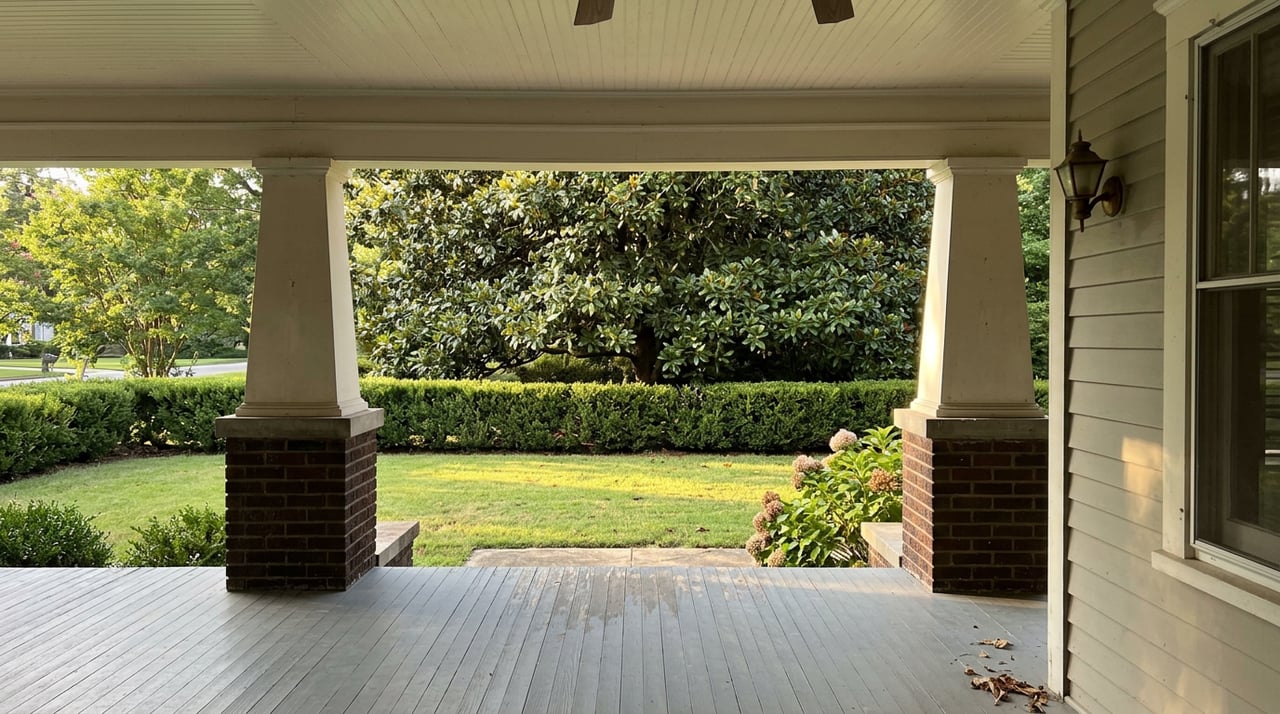
Walk a Craftsman near Smiley Library or a Queen Anne off Mariposa with almost any agent in Redlands, and you'll hear the same line somewhere between the entryway and the back porch: "This one's Mills Act eligible." It gets dropped into the pitch the way a granite countertop or a three-car garage would, as if eligibility alone settles the financial question. It doesn't. The Mills Act is real, and the tax relief it offers is significant, but it is also capped, competitive, and tied to obligations that outlast the closing table. Understanding what the program actually requires, rather than what the phrase implies, is the difference between buying a historic Redlands home with clear eyes and discovering the fine print two years into ownership.
The Discount Is Real, But the City Only Hands Out So Many
Redlands has offered Mills Act contracts since the City Council opted into the state program in November 2012, and the numbers on paper are attractive. According to the city's own program materials, the typical property tax savings for a residential Mills Act contract in Redlands runs around 60 percent. That is a meaningful reduction on a home in the $700,000s.
What most listing conversations leave out is that the city can only approve seven new contracts a year, split between five residential properties and two commercial. Applications are accepted year-round, but they're reviewed by the Historic and Scenic Preservation Commission before going to the City Council for a public hearing, and the whole process typically takes three to four months. There is no valuation ceiling anymore. The city removed its old $1 million cap on single-family properties back in 2019, opening the program to higher-value homes, but the seven-contract ceiling never moved. That scarcity is the part a listing sheet won't mention, and it's the reason "Mills Act eligible" and "Mills Act enrolled" are not the same sentence.
The Market May Already Be Pricing In What You're Hoping to Apply For
Here's where the numbers get interesting for anyone comparing a historic Redlands purchase against a newer tract home across town. The most recent neighborhood-level figures available show the median sale price in the Redlands Historic District at $748,000 as of March 2026, up 13.3 percent year over year. Over the three months ending June 2026, the citywide median across all of Redlands sat at roughly $672,000, up about 5.2 percent from the same period a year earlier.
The historic district isn't just pricier. It's appreciating more than twice as fast as the rest of the city. That gap suggests buyers are already paying a premium for the designation itself, the potential tax relief, and the architectural pedigree, whether or not the current owner ever secured a Mills Act contract. If you're budgeting on the assumption that you'll simply apply after closing and capture that 60 percent savings yourself, you're competing for one of five residential slots the entire city allocates in a calendar year. The premium is baked into the price. The contract is not guaranteed to follow.
What You're Actually Agreeing to Pay For
A Mills Act contract isn't free money you pocket. The city requires a Ten-Year Work Plan showing exactly how your tax savings will be spent maintaining or restoring the property's character-defining features, things like original windows, porches, siding, or roofing details. Your cumulative spending on those projects has to meet or exceed your annual tax savings, every year, for the life of the contract.
There's a second wrinkle. The county assessor can still raise your assessed value slightly each year, often around 2 percent, which means your required spending can creep upward too even while your tax bill stays reduced. And the application itself isn't free: the current fee is $1,160, non-refundable once you're in the review pipeline. For a buyer coming from out of state, especially someone settling an estate or coordinating a purchase remotely, that three-to-four-month approval runway matters. It's not something you fold into a 30-day escrow.
The Design Review Doesn't Go Away If You Skip the Tax Break
This is the part that catches people off guard even when they have no interest in the Mills Act at all. If a property already carries local historic designation, whether it's a single landmark or a home inside one of Redlands' local historic districts, any future exterior work needs a Certificate of Appropriateness from the Historic and Scenic Preservation Commission before you touch it. A reroof, new windows, a room addition, even repainting in some cases: all of it goes through review, Mills Act contract or not.
Redlands has counted several hundred structures under some form of historic designation, whether as a local landmark, a historic resource, part of a local or federal historic district, or a listing on the National Register. That's not a fringe category of home. If you're buying in South Redlands, near the University of Redlands, or in the blocks around Prospect Park, there's a real chance your future porch repair or window swap needs sign-off before a contractor can start. The city adopted updated design guidelines in September 2024, developed with the Architectural Resources Group and covering everything from exterior materials to accessibility retrofits. As Mayor Pro Tem Paul Barich put it when the update passed, "This is what Redlands is known for, historic buildings." That's true, and it's also a standing obligation for whoever owns one.
What the Inspection Report Will Probably Flag
Redlands built its wealth on citrus, and the housing stock from that era, largely 1880s through 1920s Victorians, Craftsmans, and Spanish Revivals clustered around downtown, Smiley Library, and South Redlands, comes with the wiring and plumbing of its time. Knob-and-tube electrical, galvanized supply lines, and lead paint show up regularly in inspection reports on these properties. None of that disqualifies a home from purchase or from historic designation, but it does affect financing conversations, insurance quotes, and repair budgeting in ways a newer build in Beaumont or Yucaipa simply won't. Buyers should expect it and plan for it rather than treating it as a surprise at the inspection table.
Where to Actually Verify Before You Write an Offer
A few resources exist precisely because this situation is common enough to need them. The city maintains a public list of designated historic resources through its Planning Division, and it's worth checking before you assume a property's status either way. The Redlands Area Historical Society has run its Heritage Award program since 1975, recognizing homes over 75 years old that have been well maintained, and its Old House Group meets throughout the year with speakers and demonstrations specifically for owners of older properties. Redlands Conservancy has helped property owners navigate historic designation applications and has successfully nominated structures like the Aurbacher-Neutra House to the National Register.
The city is also mid-stream on a citywide Historic Resources Survey running through 2026 and 2027, conducted with the Architectural Resources Group, meant to formally document places of cultural and architectural significance that haven't yet been catalogued. If you're buying or selling a property that feels historic but isn't currently on any list, that survey is actively taking input right now.
A Few Questions Worth Settling Early
Does a Mills Act contract transfer if I buy a home that already has one? Yes. The contract runs with the property, not the owner, so a new buyer inherits both the tax benefit and the Ten-Year Work Plan obligations that come with it.
If I don't win one of the seven annual slots, did I waste the application fee? The $1,160 fee covers the review process regardless of outcome, so it's worth confirming with the Planning Division where you'd land in the year's queue before committing.
Can I lose historic designation if I don't keep up the property? The city's criteria require the property to stay in good condition with its character-defining features maintained, so neglect can jeopardize both designation and any active Mills Act contract.
If you're weighing a historic Redlands purchase, whether you're relocating from out of state, settling an estate, or simply drawn to a Craftsman near downtown, the tax break is worth understanding in full before it factors into your offer. For a look at what's currently listed in the Redlands neighborhood, or to talk through how a specific property's designation status affects your timeline and budget, reach out to John Wagner. Let's Talk.